



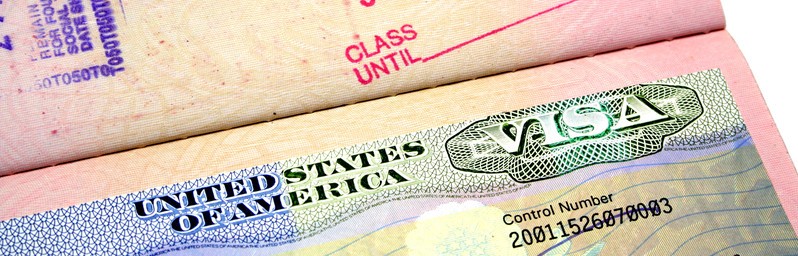
Permanent Visas and Naturalization
You may obtain a permanent immigrant visa based on one of the following categories: family-based petition, employment-based petition (EB), and United States for a statutory period of time, you will be eligible to apply for U.S. citizenship through naturalization.
Permanent Visas
The Concept of Pre-Conceived Immigrant Intent
Before applying for a visa to the United States, you have to understand an important concept called “perceived immigrant intent.”
Under current law, if you want to apply for a non-immigrant visa, you have the burden of proof, or duty, to show that you have no intent to migrate to the United States. If you fail to show that you have strong enough ties with your country of residence and the interviewing officer feels that you have no intention to return home after visiting the United States, the officer has the discretion to deny your non-immigrant visa application.
Filing an immigrant visa petition generally manifests your intent to migrate to the United States. Thus, it can be a basis for the interviewing officer to deny your non-immigrant visa application. This can be a problem for those who are subject to the annual statutory immigrant quota. The following example explains this problem.
Supposed you are 25 years old and live in England. Your mother, a U.S. citizen who lives in California, files an immigrant visa petition for you. Although an I-130 is approved, you may not apply for an immigrant visa and move to the United States until a visa number is available to you. What if you want to visit your mother in California while you are waiting for an immigrant visa number? You may apply for a non-immigrant visa but the consulate overseas may reject your application. Why is that? It is because you have an approved I-130, which shows your intent to migrate to the United States. As a result, you may not be able to visit your mother in California when you are waiting for an immigrant visa number in England.
Thus, it will be wise for you to consult with an attorney about your situation before you file any immigrant visa petition, otherwise you may have to deal with some unexpected and unfavorable consequences.
Family-based Petition
U.S. citizens may file an immigration petition for their immediate relatives: parents, unmarried children who are younger than 21 years old, and spouses without any annual quota. U.S. citizens may also file an immigration petition for their sibling and children who are married and/or over 21 years old , but these groups are subject to an annual quota. In addition, permanent residents may file an immigration petition on behalf of their spouses and unmarried children.
Generally, the first step of filing a family-based immigration petition is to file USCIS Form I-130, Petition for Alien Relative. Approval of Form I-130, however, does not mean the applicant automatically becomes a permanent resident of the United States. The following explains what will happen next in the process:
Immediate Relatives
Immediate relatives of U.S. citizens are not subject to any annual visa quota. The three most common categories of immediate relatives of U.S. citizens are spouses, unmarried children under 21 years old, and parents of U.S. citizens who are at least 21 years old.
Petition for Spouse of a U.S. Citizen (IR-1)
If you are a spouse of a U.S. citizen, you may file USCIS Form I-485, Application to Register Permanent Residence or Adjust Status, with Form I-130 concurrently if you are in the United States. If you are living overseas, you may apply for an immigrant visa at the nearest consulate/embassy as soon as the I-130 is approved.
If you are admitted to the United States as a permanent resident before the second anniversary of your marriage to the U.S. citizen spouse, you will be granted conditional permanent residency. You may file USCIS Form I-751 to remove your condition 90 days prior to your second anniversary of being admitted to the United States as a conditional permanent resident.
Petition for Unmarried Child Under 21 Years Old of a U.S. Citizen (IR-2)
U.S. citizens may file an immigrant petition for their children. If you are a child of a U.S. citizen and are under 21 years old and unmarried, you may file USCIS form I-485, Application to Register Permanent Residence or Adjust Status, with form I-130 concurrently if you are in the United States. If you are not in the United States, you may apply for an immigrant visa at the nearest consulate/embassy as soon as the I-130 is approved.
Petition for Parent of a U.S. Citizen (IR-5)
U.S. citizens who are 21 or older may file an immigration petition for their parents. There is no annual quota for this kind of petition. This means your U.S. citizen child may file USCIS form I-485, Application to Register Permanent Residence or Adjust Status, with form I-130 concurrently if you are physically in the United States. If you are not in the United States, you may apply for an immigrant visa at the nearest consulate/embassy as soon as your I-130 is approved.
Limited Family-based Petitions
Unmarried Children of a U.S. Citizen (F-1)
If you are a child of U.S. citizen and are over 21 years old and unmarried, you fall under the F-1 category of Family First Preference. After your I-130 is approved, you still CANNOT file for adjustment of status or apply for an immigrant visa until a visa number is made available to you. According to current law, only 23,400 annual permanent visas are available to unmarried children of U.S. citizens who are 21 or older.
Spouses, Minor Children, and Unmarried Adult Children of a U.S. Permanent Resident (F-2)
Spouses and unmarried children who are under 21 years old of a U.S. permanent resident fall under the F-2A category. Annually, 77% of the 114,000 visa allocated to the Family Second Preference Category goes to the F-2A group. Unmarried adult children of U.S. permanent residents belong to the F-2B category and will receive 23% of the 114,000 visa allocated to the Family Second Preference Category.
If you fall under the Family Second Preference category, after your I-130 is approved, you must wait for an immigrant visa number before you can apply for an immigrant visa or adjust status to become a permanent resident.
Married Children of a U.S. Citizen (F-3)
23,400 annual permanent visas are available to married children of U.S. citizens and their family members. If you fall under the Family Third Preference category, after your I-130 is approved, you must wait for an immigrant visa number before you can apply for an immigrant visa or adjust status to become a permanent resident.
Petition for Siblings (F-4)
A U.S. citizen may file an immigrant petition on behalf of their siblings. Generally, this is the group that has to wait for the longest due to the number of applicants and the group is lower in the priority list. Every year, there are 65,000 visas available to the Family Fourth Preference category.
K-1 Visas: Fiancé of U.S. citizens
Fiancé(e)s of U.S. citizens are eligible for a K-1 visa. Generally, you must have engaged or entered into a marriage contract with a U.S. citizen when you apply for the K-1 visa. Moreover, you must have met your U.S. citizen fiancé(e) within the preceding two years, unless you can show that such meeting is contrary to your tradition.
A K-1 visa allows you to enter the United States once. Upon entry, you must be married to the sponsoring U.S. citizen within 90 days and adjust your status as a permanent resident.
Employment-based Petition
There are generally five categories of employment-based immigrant visa petition: Priority Workers (EB-1), Members of the Professions Holding Advanced Degrees or Persons of Exceptional Ability (EB-2), Skilled Workers, Professionals, and Other Workers (EB-3), Certain Special Immigrants (EB-4), and Immigration through Investment (EB-5).
Priority Workers (EB-1)
Under current law, there are three groups that fall under the category of Priority Workers: (A) aliens with extraordinary abilities; (B) outstanding professors and researchers; and (C) multinational executives and managers. For a description and eligibility of each group, please contact our office or refer to Section 203(b)(1) of the Immigration and Nationality Act.
No labor certification is necessary for applicants under EB-1. Therefore, an EB-1 petition is a two-step application. First, you must file USCIS form I-140, Immigrant Petition for Alien Worker, with supporting documents. After the I-140 is approved, you have to wait until a visa number is available to apply for an immigrant visa or adjust status.
Members of the Professions Holding Advanced Degrees or Persons of Exceptional Ability (EB-2)
An alien who 1) has a U.S. graduate degree (generally graduate degrees are master’s degrees or doctoral degrees) or equivalent foreign degree; or 2) has a bachelor’s degree and at least five years of experience in related field may be considered as members of the professions holding advanced degree. On the other hand, an alien with exceptional ability in science, arts, or business may file an EB-2 under the national interest waivers (NIW).
Labor certification is generally required for EB-2 applicants, except those who are filing for NIW. The process to receive labor certification is also known as PERM (Program Electronic Review Management), which is the name of the electronic program used by the Department of Labor (DOL) to process labor certification request. In order to obtain a labor certification, three things have to be completed. First, the employer has to contact the state workforce agency that has jurisdiction over the proposed area of employment and request a prevailing wage determination. Second, the employer must launch a recruitment effort and show that there is no U.S. worker that can qualify for the position despite such effort. Third, the employer has to submit ETA Form 9089, Application for Permanent Employment Certification, to the Employment and Training Administration (ETA), an agency under DOL.
After a permanent labor certification is issued by the Department of Labor, you must file USCIS Form I-140, Immigrant Petition for Alien Worker, along with a labor certification and a full-time permanent job offer. After the I-140 is approved, you have to wait until a visa number is available to apply for an immigrant visa or adjust status.
Skilled Workers, Professionals, and Other Workers (EB-3)
There are three subcategories under EB-3. (A) skilled workers with two years of experience; (B) professionals with a U.S. bachelor’s degree or foreign equivalent degree; (C) other workers.
To be considered as a skilled worker under EB-3, you must file ETA Form 750 with a full job description, and the Department of Labor will determine whether your job is a skilled or not. On the other hand, if you have a foreign bachelor’s degree, you must obtain a foreign credential evaluation to show that your foreign degree is indeed equivalent to a bachelor’s degree in the United States.
The process to receive labor certification is also known as PERM (Program Electronic Review Management), which is the name of the electronic program used by the Department of Labor (DOL) to process labor certification request. In order to obtain a labor certification, three things have to be completed. First, the employer has to contact the state workforce agency that has jurisdiction over the proposed area of employment and request a prevailing wage determination. Second, the employer must launch a recruitment effort and show that there is no U.S. worker that can qualify for the position despite such effort. Third, along with prevailing wage information and evidence of recruitment effort, the employer has to submit ETA Form 9089, Application for Permanent Employment Certification, to the Employment and Training Administration (ETA), an agency under DOL.
After a permanent labor certification is issued by the Department of Labor, you must file USCIS Form I-140, Immigrant Petition for Alien Worker, with supporting documents. After the I-140 is approved, you have to wait until a visa number is available to apply for an immigrant visa or adjust status.
Certain Special Immigrants (EB-4)
An alien who is a member of a religious dominion that has a non-profit religious organization may file an immigration petition under EB-4. You must 1) work as a minister for the religious organization in the United States; 2) serve in a professional capacity in a religious vocation or occupation for the religious organization; or 3) work in a religious vocation or occupation for the religious organization or its nonprofit affiliate such as missionaries.
In order to file an EB-4, you must file USCIS Form I-360 Petition for Amerasian, Widow(er), or Special immigrant.
Immigration through Investment (EB-5)
An alien may file for an immigration petition through investment. In order to qualify under EB-5, you must 1) establish a new business enterprise; 2) invest at least $1,000,000 or $500,000 in targeted employment areas; and 3) benefit the U.S. economy by creating new job opportunities or save jobs from being lost to economic distress.
To file an immigration petition as investor, you have to file USCIS Form I-526, Immigrant Petition by Alien Entrepreneur. Once an I-526 is approved, you may apply for an immigrant visa or adjust status to become a conditional permanent resident. You may remove condition and become a permanent resident after two years of being admitted to the U.S. as an alien entrepreneur.
Naturalization
A spouse of a U.S. citizen may apply for citizenship three years after they are admitted to the U.S. as a conditional permanent resident/permanent resident. Other permanent residents may be naturalized five years after being admitted to the U.S. as a conditional permanent resident/permanent resident.
To apply for citizenship, you have to file USCIS form N-400, Application for Naturalization. Unless you qualify for a waiver, you will be interviewed by a USCIS officer, who will test your English and your knowledge on U.S. history and civics.

USCIS Immigration Forms
Visa Application Forms
Study materials for new natrualization test
Your case status with USCIS
Processing time of your case with USCIS
Department of State's Visa Bulletin
Information on this page does not constitute as legal advice and receipt of this information does not establish an attorney-client relationship. For specific inquiries, please contact us and schedule for a consultation.
Home | About Us | Services | FAQs | Contact
© 2009 Law Offices of Dixon H. Fung, P. C., All Rights Reserved
Website Design by John Kung and Gary Wong
How can we help? Call for a Free Consultation (626) 817-2522
